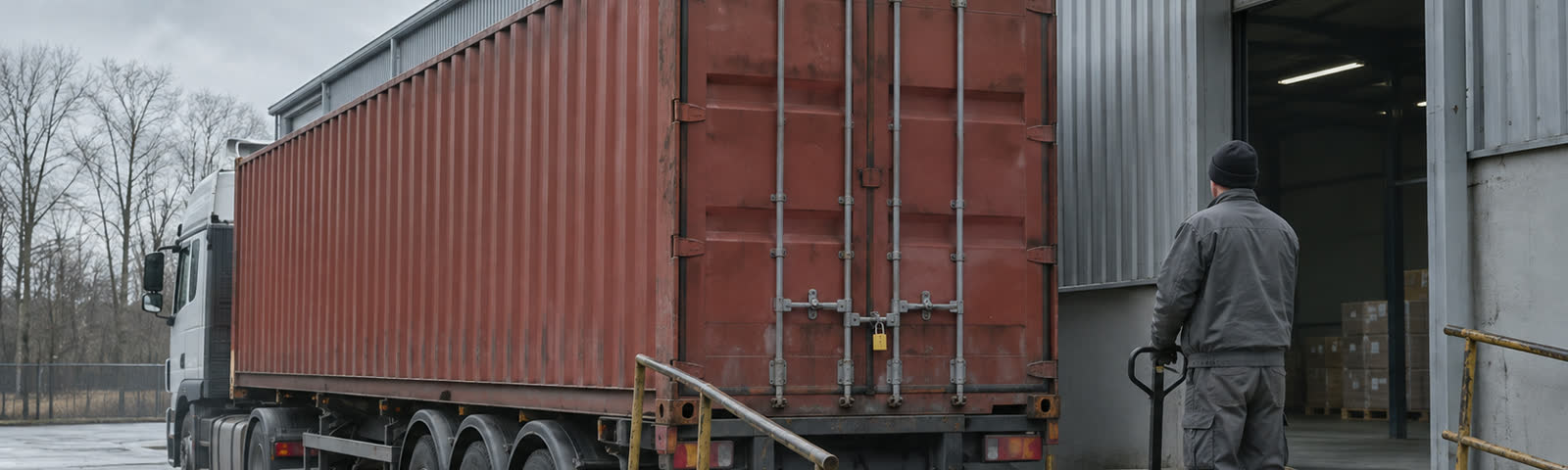
Container import from Asia: from the port of departure to the customer
This scenario is an example of a typical task. It does not describe a particular customer.
Starting situation
An importer based in Germany buys goods from a manufacturer in Asia. The order fills a full container. The importer has bought on terms under which the manufacturer brings the goods to the port of departure; from there everything is the importer's responsibility. It has no warehouse of its own that can unload a container, and its customers in Germany and the neighbouring countries want to call off the goods by the pallet over several weeks.
What the customer needs
- A sea freight booking from the port of departure and collection of the container at the European port of arrival
- An import clearance that is prepared before the vessel berths, so that no demurrage arises
- A place where the container is unloaded, the goods counted and put into stock by the pallet
- Deliveries to its customers at call-off, with delivery note and proof of delivery
How we handle it
Documents before loading.
We receive the commercial invoice, packing list and draft bill of lading from the importer. We check whether goods description, quantities and weights match and whether the details are sufficient for tariff classification. Errors are corrected now at the manufacturer, not later at the port.
Booking.
We book the container through our partners on a departure that matches the importer's needs and confirm departure, expected arrival and port of arrival to it.
Preparing the arrival.
While the vessel is at sea we prepare the import declaration with commodity code and customs value, settle the EORI number and the authorisation and plan the collection at the port and the unloading with us. We notify the warehouse of the goods receipt with an article list.
Arrival and clearance.
As soon as arrival is confirmed we lodge the declaration. After release by customs the container is released and collected by our transport partner. The customs assessment goes to the importer.
Unloading and goods receipt.
We unload the container, check the goods against the packing list, report discrepancies and transport damage with photographs, palletise the cartons and book the stock in. The empty container goes back within its free time.
Delivery at call-off.
The importer calls off pallets for its customers. We pick, prepare delivery notes, book time slots with the recipient and deliver by lorry. The proof of delivery and a current stock report go to the importer.
A similar task? Tell us about your shipment.
Request a quoteServices involved
If the manufacturer sends a part quantity instead of a full container, the same sequence runs as a part container (LCL) through a consolidation warehouse at the port of arrival. If the ship is too slow, we check rail for the same route (see Rail freight).
What the customer gets
One contact for the whole way; checked documents before loading; a customs declaration that is ready before arrival; a container collected and unloaded without demurrage; a counted, booked-in stock with a report; and deliveries to its customers with delivery note, time slot and proof of delivery. It can see at any time how much stock is left and does not have to look after any of the handover points itself.
Expecting a container?
Tell us the port of departure, the goods, the volume and the status of the order. We will tell you which documents we need now and what the way to your customers looks like.